
 Free Delivery & Return
 365-Day Returns
 10 Million Happy Customers
 500,000 Products in Stock


Wardrobes


Wardrobes
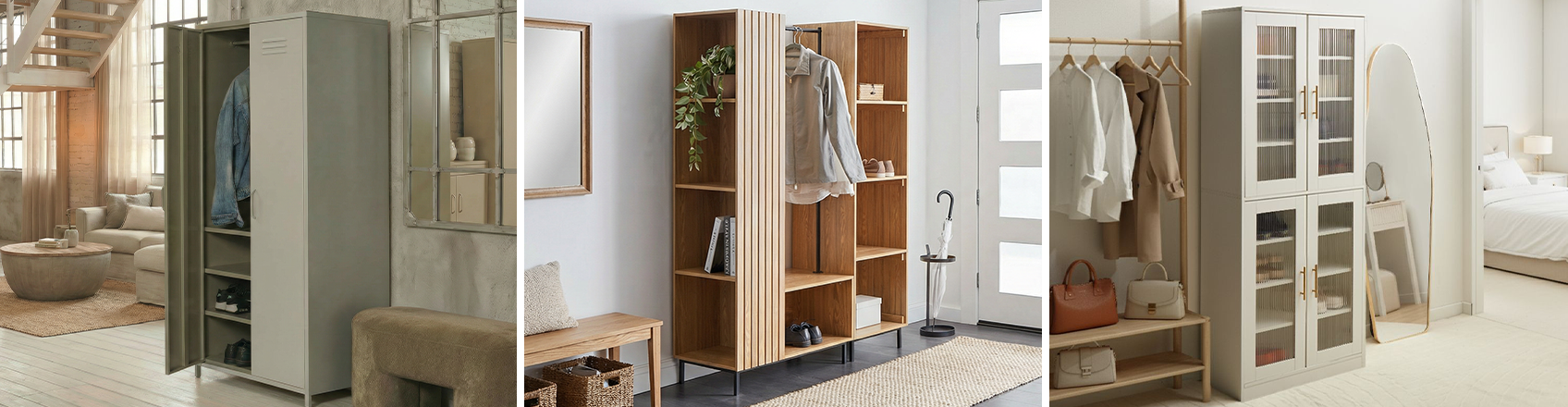
A wardrobe is one of the few pieces of furniture you interact with every single day, yet it is rarely given the attention it truly deserves. Chosen well, it does far more than store your clothing - it brings a sense of calm, order, and considered style to the rooms you live in most. Whether you are furnishing a serene bedroom, creating a welcoming hallway, or finally bringing character to a spare room, the right wardrobe has the quiet power to transform a space entirely.
Which wardrobe suits which room?
Every room has a different need, and the right wardrobe should feel like it was always meant to be there.
Open wardrobe
An open wardrobe with a dedicated hanging rail and generous shelving becomes the natural anchor of any entryway. It is stylish enough to make a strong first impression on anyone who walks through the door, yet practical enough to handle coats, shoes, and everyday essentials without missing a beat - morning after busy morning.
Closed wardrobe
In a bedroom, a closed wardrobe in engineered wood or a warm wooden finish delivers the visual calm that a sleeping space genuinely needs. Everything stays neatly out of sight, the room breathes more easily, and the overall aesthetic remains clean and considered without requiring any particular effort to maintain it.
Wardrobe for the dressing area
For those who want their dressing corner to feel truly special, certain designs go well beyond simple storage. Glass-panelled doors, refined hardware or even integrated LED lighting can turn a functional corner of the room into its most striking feature - something closer to a personal boutique than a standard bedroom fixture.
Metal wardrobe for the spare room
Bold, robust, and available in a range of striking colours, a metal wardrobe brings a confident practicality to a spare room or a teenager's space. These units are built to handle daily use without compromise, and their clean industrial character means they never look like a stopgap solution - they look like a deliberate choice.
What should you look for when choosing a wardrobe?
Beyond style and room placement, a few practical details make a significant difference to how well a wardrobe works for you over the long term.
- Storage configuration: think carefully about how your clothing is divided between hanging items and folded pieces. A wardrobe with a generous hanging rail suits those with larger collections of jackets, dresses, and shirts, while models with multiple internal shelves offer a more flexible solution for folded garments, accessories, and everyday items that need to stay within easy reach.
- Security and privacy: for a spare room or any shared living situation, a key-locked wardrobe adds a simple but meaningful layer of privacy. It is a small detail that makes a considerable practical difference, particularly in households with multiple occupants or when storing valuables alongside clothing.
- Dimensions and fit: always measure the available space carefully before choosing. The width, height, and depth of a wardrobe should feel proportionate to the room - a piece that is too large can dominate, while one that is too compact can feel insufficient. Getting the dimensions right is the single most important step in ensuring the wardrobe genuinely enhances the space rather than simply occupying it.
What size wardrobe do you need?
Getting the dimensions right is the most important practical decision after choosing the wardrobe type, as even a beautiful piece will feel wrong if it overwhelms or underwhelms the space.
Width
Measure the wall space carefully and leave at least 10-15 cm of clearance on either side to avoid a cramped feel - a wardrobe that stretches wall-to-wall can make a room feel smaller rather than more organised. Standard widths range from 80 cm for compact single wardrobes to 200 cm or more for double or triple-door designs, so match the width to both your storage needs and the proportions of the room.
Depth
Most wardrobes sit between 50-60 cm deep, which provides enough hanging space for clothes on standard hangers without protruding too far into the room. In tighter bedrooms or hallways, look for slimmer designs around 40-45 cm deep - these work well for hanging garments sideways or storing folded items, though they offer less flexibility for bulkier coats and jackets.
Height
Taller wardrobes make better use of vertical space and offer more storage without increasing the footprint, but check your ceiling height and leave enough clearance at the top to avoid a visually heavy or oppressive feel - around 20-30 cm between the wardrobe top and ceiling usually looks most balanced.
How do you care for your wardrobe?
A well-chosen wardrobe is a long-term investment, and a little regular attention keeps it looking its best for years to come.
- Wooden and engineered wood finishes: a soft dry cloth is all that is needed to remove dust and maintain the surface - avoid harsh chemical cleaners that can dull or damage the finish over time.
- Metal wardrobes: particularly low-maintenance by nature; a simple wipe-down with a damp cloth is enough to keep the surface clean and free from marks.
- Hinges and locking mechanisms: benefit from an occasional check to ensure everything operates smoothly, keeping daily use effortless and extending the life of the unit.
- Adjustable shelving: should be repositioned gradually rather than forced, preventing unnecessary strain on the fittings and keeping the interior configuration stable over time.