Free Delivery & Return
 365-Day Returns
 10 Million Happy Customers
 500,000 Products in Stock


Plant Pots


Plant Pots
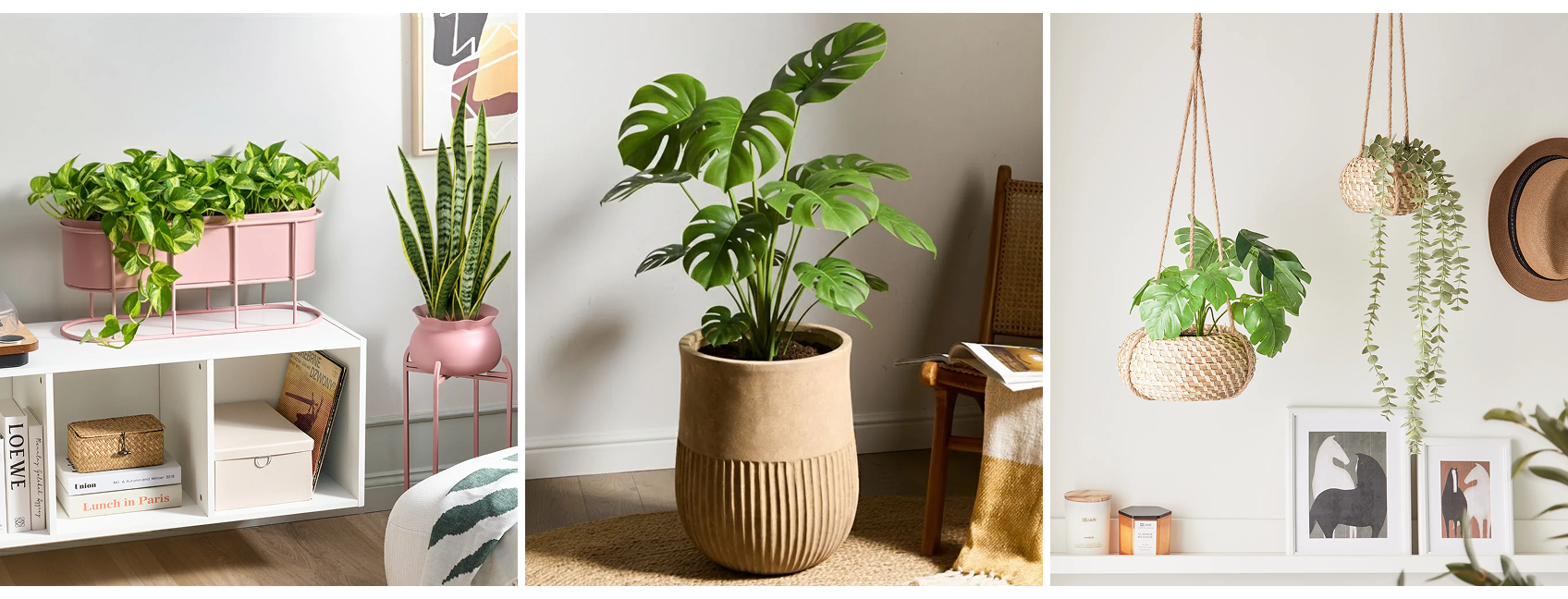
Indoor plant pots provide a practical way to display your houseplants while protecting your floors and furniture from water damage. Before selecting a planter, you should consider the diameter of your current plant's root ball and whether the container will serve as a direct growing environment or simply as a decorative outer cover. Choosing the right design ensures your greenery remains stable and healthy while seamlessly matching your existing decor.
How to choose the right size?
The dimensions of your new planter must offer enough space for the root system to breathe and grow over time. As a general rule, select a pot that is a few centimetres wider and deeper than the current nursery pot. For larger indoor trees, such as a ficus or monstera, opt for deep, sturdy floor planters that provide stability and prevent the plant from tipping over as it grows taller. For smaller succulents or trailing vines, compact pots work perfectly on shelves, windowsills and sideboards.
Using plant stands to elevate greenery
If you want to draw attention to a specific houseplant or lift trailing foliage off the ground, a pot with an integrated plant stand is an excellent solution. Stands are particularly useful in empty corners or next to low furniture, helping you create varying heights and visual interest in your room without taking up too much floor space.
Shop now: all artificial plants and flowers
Which material works best for daily use?
The material of your pot affects both its visual appeal and how practical it is for long-term plant care. Consider these common options:
- Ceramic and stoneware designs are heavy and exceptionally stable, making them ideal for top-heavy plants that might easily tip over.
- Metal planters provide a sleek, industrial touch and are highly durable, though they are often best used as outer cover pots to prevent internal rusting over time.
- Woven baskets or natural rattan add texture to a room, but they must always include a waterproof plastic lining to protect the outer fibres from damp soil and watering spills.
What to check before buying?
The most important practical feature of any houseplant pot is its approach to drainage. Check if the model has a pre-drilled drainage hole at the base. If it does, you will need to place a waterproof saucer underneath to protect your wooden floors or carpets from moisture. If the pot does not feature a hole, it is designed to be used as a decorative cover; simply place your plant inside its original plastic nursery pot, making it easy to lift out when you need to water it in the sink.
To narrow down your choice, measure the diameter of your current nursery pot to ensure it will fit comfortably inside the new planter without getting wedged in. Check whether the material is sturdy enough to support the weight of the plant, especially if you are potting a tall indoor tree. Finally, verify the drainage situation so you can establish a straightforward watering routine that keeps both your plant healthy and your floors completely dry.