Free Delivery & Return
 365-Day Returns
 10 Million Happy Customers
 500,000 Products in Stock

Cast Iron Pots: Top Benefits & Why You Should Use Them
Reviewed by the Beliani Content Team · Updated October 2026
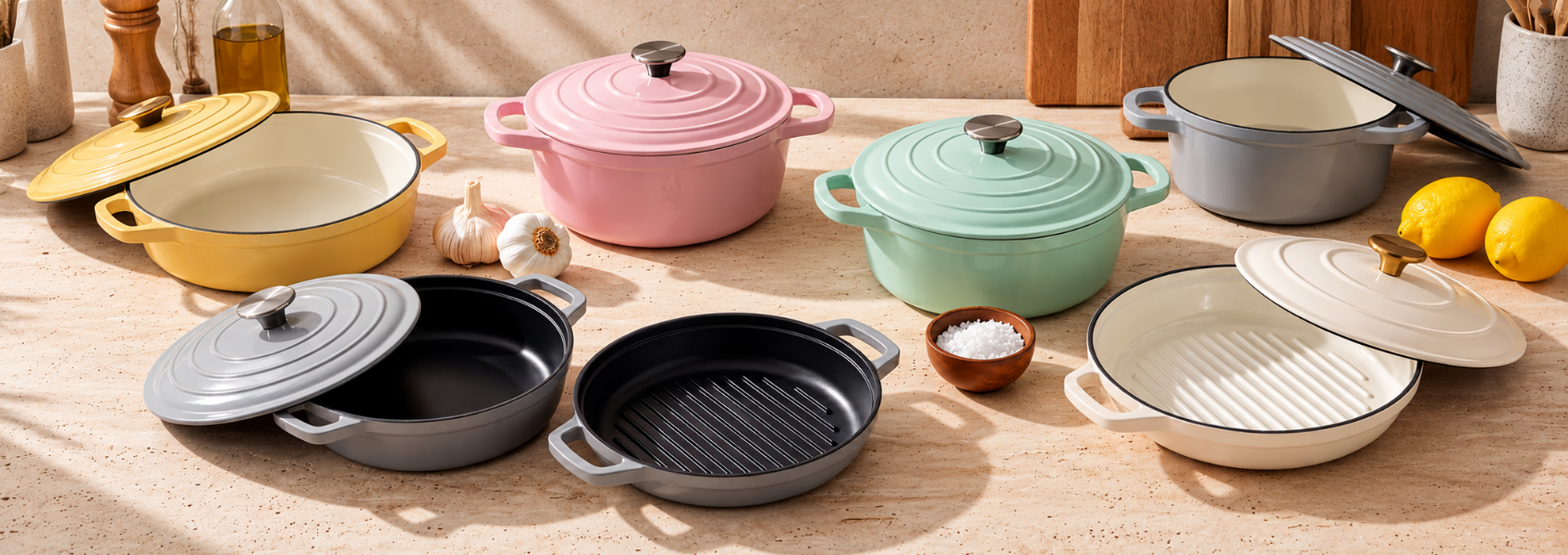
A cast iron pot behaves differently from almost anything else in the kitchen: it takes longer to heat up, holds that heat with unusual stubbornness, and keeps working for decades rather than years. That's worth knowing before you buy one. The same qualities that make it so good for a slow stew also come with care habits that lighter cookware doesn't need. This guide looks at how cast iron can improve your cooking, walks you through the cleaning routine, and covers the maintenance dos and don'ts.
In short
Why are cast iron pots worth buying?
Cast iron pots hold and release heat more evenly than thin metal pans, which keeps stews, braises and sauces at a steady simmer with little attention needed. The iron itself is magnetic, so the same pot works on induction, gas, electric and ceramic hobs without any adaptor. With basic care, a cast iron pot can last for decades, whereas lighter non-stick cookware typically needs replacing every few years.
What is a cast iron pot, and how does it compare to aluminium and stainless steel?
Cast iron is a dense alloy of iron and carbon, poured into a mould and left to cool slowly, which is exactly what gives cookware made from it such thick, heavy walls. An aluminium pot is built the opposite way: thin-walled and light, so it heats up and cools down almost immediately. Stainless steel sits somewhere in between: durable and completely non-reactive, but it doesn't conduct heat well on its own, which is why most steel cookware is actually clad with a core of aluminium or copper.
| What matters | Cast iron | Aluminium | Stainless steel |
|---|---|---|---|
| Heat distribution | Slower to heat, but even across the whole base | Fast to heat, but prone to hot spots | Uneven alone; more even with a multi-layer base |
| Heat retention | Stays hot long after the hob is switched off | Cools down almost as fast as it heated | Holds heat better than aluminium, less than cast iron |
| Weight | Heavy - a small 15cm pan alone can weigh around 1.5kg | Light enough to lift and tip one-handed | Noticeably lighter than cast iron, heavier than aluminium |
| Reacts with acidic food | Bare iron can, affecting taste and seasoning | Uncoated aluminium can pit and leach into food | Doesn't react with acidic food at all |
| Typical lifespan | Decades, often passed down between generations | A handful of years before it warps or wears | Decades; highly resistant to rust and corrosion |
The trade-off for all that heat retention is weight. A lidded pot with a 19cm base can reach close to 4.7kg before you've added a single ingredient, so it genuinely is the heavier choice for your kitchen - worth factoring in if you have limited wrist or arm strength, or if you're choosing a pot to lift and carry often.
What is a cast iron pot for, and why is it worth cooking in?
A cast iron pot's job is simple: hold a steady, even heat for as long as a dish needs it, whether that's a two-hour braise on the hob or a loaf of bread baked under a closed lid. It's built for cooking that rewards patience rather than speed, not for a quick five-minute fry.
Part of what makes it so satisfying to cook with is how much one pot can do. The same pot that sears meat on the hob can go straight into the oven to finish, then come to the table to serve, without the food losing heat or you adding an extra dish to wash. Combined with the deep sear bare iron gives food, that's why so many people reach for it more than any other pan in the cupboard.
Advantages
- Even heat: holds and spreads heat evenly, so food cooks consistently without hot spots
- Works everywhere: suits every hob type, including induction, since the iron itself is magnetic
- One pot, three jobs: moves from hob to oven to table, with no dish to transfer food into
- Built to last: often outlives several lighter pans with basic care
- Improves with age: bare iron develops its own non-stick surface the more it's used
Disadvantages
- Heavy: noticeably heavier than aluminium or stainless steel cookware of the same size
- Upkeep: bare iron needs seasoning and can't go in the dishwasher
- Not instant: slower to heat up than thinner pans, so it's not the fastest choice for a quick weeknight fry
- Acid-sensitive: bare iron can react with very acidic or sour dishes if used often
- Price: enamelled versions cost more to buy than an equivalent aluminium pot
Does cast iron work on every type of hob?
Cast iron is thick and dense, so it's slower to heat than a thin aluminium or steel pan, but it spreads and holds that heat evenly once it gets there - ideal for a long, steady simmer rather than a quick blast of heat. That same density makes it naturally ferromagnetic, so it works on every hob type: it heats up in moments on induction, and is just as reliable on gas, electric and ceramic. Bare, uncoated cast iron can also go directly onto a grill or an open flame, which enamelled versions should avoid.
It also stays warm for a long time after leaving the hob, finishing a braise gently and keeping food hot at the table. Two quick safety rules: lift the pot rather than dragging it on glass-ceramic hobs, since the rough base can scratch the glass, and avoid the induction boost setting, since pushing to maximum power too quickly is one of the more common ways to warp a base.
Shop now: pots and pans
Which size pot do you need?
Cast iron pots are sold by diameter and by litre capacity, and the right size depends on who you're cooking for and what you usually make, not on buying the biggest one available.
- Around 2–3 litres suits one or two people, and is noticeably easier to lift when full
- Around 4–5 litres is the standard family size, enough for a stew or roast for four
- 6 litres or more suits batch cooking, big braises, or regularly cooking for a crowd
- A wide, shallow pot suits searing and browning several pieces at once; a taller, narrower one suits soups and stews that need less surface area
- Match the base diameter to your hob's burner size - the walls don't need direct heat, only the base does
Enamelled or bare: which suits your kitchen?
Bare cast iron
- Tolerates much higher oven and grill temperatures
- Typically the lower purchase price
- Needs seasoning and must be dried immediately to prevent rust
- Frequent acidic cooking can strip the seasoning over time
Enamelled cast iron
- Hand wash only, no seasoning needed
- Safe with acidic foods - the enamel doesn't react
- Oven-safe to around 230–260°C, depending on brand and handle
- Typically the higher purchase price
Some lids are self-basting
Many cast iron pot lids have raised bumps on the underside, rather than a flat surface - a design often called self-basting. As steam rises and hits these bumps, it condenses and drips back down onto the food instead of running off to the sides, continually basting whatever's cooking without you lifting the lid. It's a small design detail, but it's a big part of why slow-cooked dishes in a cast iron pot stay so moist.
How do you prepare a cast iron pot before first use?
What you need to do before cooking in a new pot depends on whether it's enamelled or bare.
An enamelled pot needs nothing more than a wash in warm, soapy water and a thorough dry before its first use - the glass-like coating is already sealed and ready to cook on.
A bare, uncoated pot needs seasoning first, which builds the base layer of its non-stick surface:
- Wash the inside and outside with warm water and a little mild soap, scrubbing lightly to remove any dust or residue left from casting
- Dry it completely, then warm it briefly on the hob to drive off any remaining moisture
- Rub a very thin layer of a neutral oil, such as rapeseed or sunflower, over every surface, inside and out
- Bake it upside down in the oven at around 220–230°C for 30–40 minutes, then let it cool completely
- Repeat the oiling and baking two or three times before cooking anything acidic or delicate in it
Can you grill indoors with a cast iron pan?
Yes, though this is usually a job for a ridged cast iron frying pan rather than the pot itself. The raised ridges lift meat, fish or vegetables above the fat and juices that collect in the base, so the food chars and picks up visible grill marks instead of stewing in its own liquid. Cast iron's heat retention matters here too: once the ridges are hot, they stay hot enough to sear several batches of food in a row, which thinner pans struggle to do.
One safety note worth flagging: this means a ridged cast iron pan on the hob, never an actual outdoor charcoal or gas grill brought indoors, which produces dangerous levels of carbon monoxide in an enclosed room.
Which dishes suit a cast iron pot?
Cast iron isn't the right choice for every meal, but it earns its place for dishes that benefit from steady, lasting heat.
Low and slow
Braises and stews
Even heat keeps a long simmer steady without hot spots, so tougher cuts of meat soften evenly over hours rather than catching on one side of the pot.
Stovetop to oven
Roasts and bread
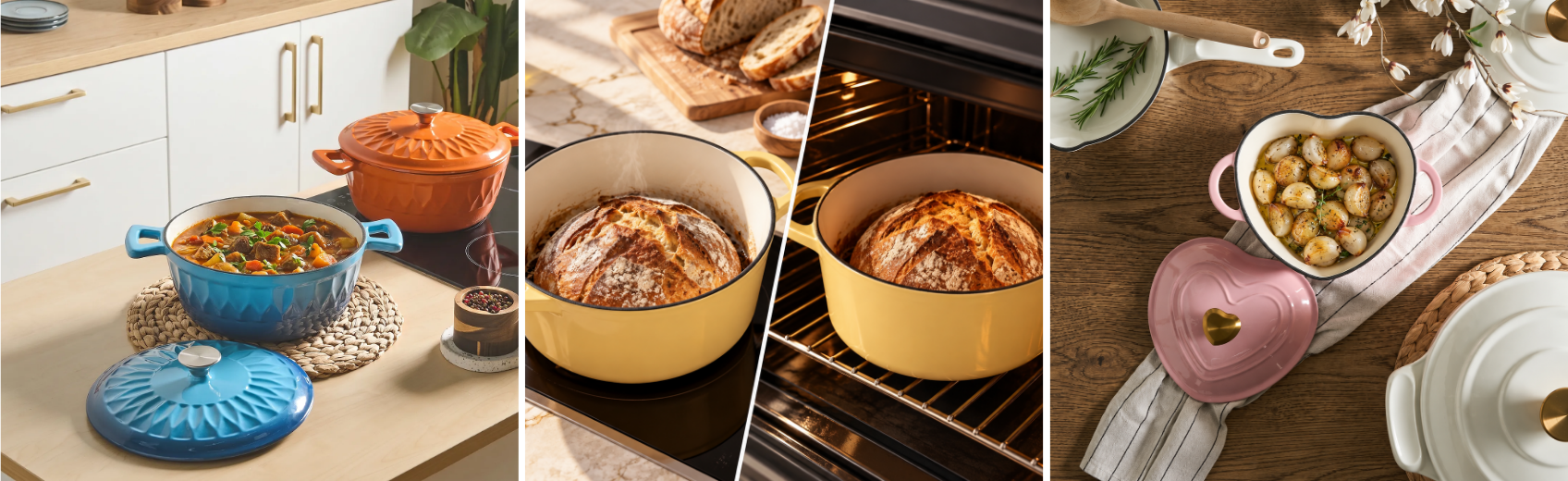
The same pot sears on the hob, then moves straight into the oven to finish, so there's no need to transfer the dish and lose heat or moisture.
Pot to table
Casseroles
Because the pot stays hot for a long time after cooking, it can go straight to the table and keep a casserole or stew warm through the meal.
Read more: choosing dinnerware for the table
How long does a cast iron pot last?
A cast iron pot that's cared for properly can realistically last for decades, and many households pass a well-used one down between generations. Enamelled pots are less fussy to maintain long-term since there's no seasoning to keep up, while bare cast iron rewards regular use by improving with age.
Bare cast iron builds its own non-stick surface
Every time you cook with oil in a bare cast iron pot, a thin layer bonds to the surface and builds up over repeated use. This build-up is called patina - the dark, faintly glossy coating that makes bare cast iron naturally non-stick. Unlike a factory non-stick coating, patina doesn't wear out, it keeps improving the longer the pot is used.
How to care for a cast iron pot day to day?
A few consistent habits do more for a cast iron pot's lifespan than any single deep clean:
- Wash by hand in warm water, skipping harsh detergents and abrasive scourers on bare iron
- Dry completely straight after washing, since damp bare iron can start rusting within hours
- Oil bare iron with a thin layer after every wash; enamelled cast iron doesn't need this step
- Store with the lid slightly open, ideally with a paper towel inside to absorb leftover moisture
Beyond this daily routine, bare cast iron also benefits from a full re-seasoning - oiling and baking it as you did before first use - around once a year, or sooner if it sees heavy use or starts looking dry and dull.
Caring for bare cast iron
Bare iron needs a bit more attention than enamelled, mainly around water, stuck-on food and rust:
- Never leave it sitting in water to soak - prolonged contact with water is the fastest way to trigger rust, so wash it straight after use and dry it immediately
- For burnt-on food, reheat a little water in the pot to loosen it, then scrape gently with a wooden or plastic scraper rather than scouring it with soap
- If rust does appear, scrub it off with fine steel wool or a coarse-salt paste, then dry thoroughly and re-season with a thin layer of oil baked on in the oven
Caring for enamelled cast iron
Enamelled pots are more forgiving, but a few habits still keep the glossy coating looking its best:
- A short soak in warm water is fine for enamelled pots, unlike bare iron - it won't cause rust
- For burnt-on food, soak briefly with a little baking soda added to the water, then wipe clean rather than scraping at the enamel
- There's no rust risk at all, since the enamel keeps the metal underneath from ever being exposed
Before you dive in
Bare cast iron and anything very sharp or sour don't mix well. Long-simmered tomato sauces, wine reductions, sauerkraut, or a vinegar-heavy braise can strip the seasoning and pick up a metallic taste if cooked in an unlined pot - save those for an enamelled one, or a different pan altogether. None of that rules out the five below.
Five dishes worth cooking in cast iron
Tap a dish to see how it's done
A deep, crackly crust without overcooking the centre - cast iron holds intense heat without dropping temperature when cold meat hits the pan.
- Pat steak completely dry, season generously with salt, and dry-brine in fridge for 40–60 minutes
- Preheat skillet over high heat until smoking; add 1 tbsp high-smoke-point oil (avocado or canola)
- Sear 2–3 minutes per side; add butter, crushed garlic, and thyme during the last minute to baste
- Remove at 52°C–54°C (medium-rare) and rest for 5–8 minutes on a warm plate before slicing
Seared steak
Tap for the recipe
A thick, chewy centre with crisp, golden edges - baking the dough as one giant cookie keeps the middle soft far longer than individual cookies would.
- Cream softened butter with sugar and brown sugar until light, then beat in an egg and vanilla
- Fold in flour, baking soda, salt and chocolate chips until just combined
- Press the dough evenly into a greased pan and bake at 180°C for 20–25 minutes, until the edges are golden and the centre still looks slightly underdone
- Rest for 10 minutes before slicing, so it holds together but stays warm and gooey
Skillet cookie
Tap for the recipe
Eggs poached gently in an aromatic tomato sauce - best in an enamelled pot, since the sauce is acidic.
- Sauté diced onions, bell peppers, garlic, cumin, and paprika in olive oil for 8–10 minutes
- Add crushed tomatoes and simmer gently for 12–15 minutes until sauce thickens
- Make small wells in sauce, crack in eggs, cover, and cook on low heat for 5–8 minutes
- Garnish with crumbled feta and fresh herbs; serve straight from the pot with crusty bread
One-pan shakshuka
Tap for the recipe
Heavy iron radiates heat evenly, roasting root vegetables in savory drippings while keeping chicken skin golden and ultra-crisp.
- Pat 1.5–2 kg chicken dry, season thoroughly with salt, pepper, herbs, and olive oil
- Arrange chopped onions, carrots, and garlic in bottom of pan; place chicken breast-side up on top
- Roast UNCOVERED at 210°C for 50–60 minutes until thickest part of thigh reaches 74°C
- Rest for 10–15 minutes before carving to allow juices to redistribute
Whole roast chicken
Tap for the recipe
An oiled pan base fries dough from underneath while cheese caramelised against iron walls creates an iconic crispy crown.
- Coat pan interior with 2 tbsp olive oil; press dough into base and 2 cm up sides
- Layer low-moisture mozzarella first (to edges), then spoon tomato sauce and toppings over cheese
- Bake on lowest oven rack at 245°C for 18–22 minutes until crust is deep golden
- If needed, heat on stovetop over medium heat for 1–2 minutes to finish bottom crispiness
Deep-dish style pizza
Tap for the recipe
What to check before buying a cast iron pot
A few practical checks will narrow down the right pot for your kitchen and how you cook.
- Match the capacity to how many people you usually cook for, not just the dish you have in mind today
- Check that the handles and any lid knob are rated for the oven temperatures you'll actually use
- Decide between enamelled and bare iron based on how much seasoning and drying you're willing to do
- Confirm it suits your hob type, which matters most if you cook on induction or an open flame
- Lift the empty pot in the shop if you can, since cast iron is heavy and a full pot adds considerably more weight
- Check the lid sits tightly, which matters for slow braises where you don't want moisture escaping
Frequently asked questions
Can you put cast iron pots in the dishwasher?
Most enamelled cast iron is dishwasher-safe according to the manufacturer's own care instructions, though hand washing is still recommended to keep the glaze looking its best over time. Bare, uncoated cast iron is the one that should never go in the dishwasher, since the water and detergent will strip its seasoning and can cause rust.
Is a cast iron pot the same thing as a Dutch oven?
Not exactly, though the terms overlap heavily. "Dutch oven" usually refers to a deep, lidded cast iron pot built for slow braising and oven baking, while "cast iron pot" is the broader category that also covers shallower pots and pans. In practice, most Dutch ovens are cast iron pots with a specific shape in mind.
Can you use metal utensils on a cast iron pot?
Bare cast iron is tough enough to resist scratching from metal utensils. On enamelled cast iron, it's better to use wood, silicone or nylon, since repeated contact with metal can eventually chip the glossy coating.
Why does a new cast iron pot smoke or smell the first few times you use it?
Freshly seasoned bare cast iron can give off a faint smell and a little smoke the first few times it's heated, as the last traces of oil used in seasoning burn off. It fades with use and isn't a sign of a fault, though it's worth ventilating the kitchen while it happens.
Why shouldn't you add cold liquid or food to a hot cast iron pot?
Cast iron expands unevenly when its temperature changes too quickly, which can crack the metal or cause an enamelled coating to craze. Let cold ingredients sit at room temperature first, or add them before the pot gets hot, rather than dropping them straight into a hot pan.
Can you store leftovers in a cast iron pot?
It's best not to. Food left sitting in the pot, especially anything acidic, can react with bare iron and pick up a metallic taste, and even enamelled pots are better off emptied so they can be washed and dried properly. Move leftovers to a separate container once you've finished cooking.