Free Delivery & Return
 365-Day Returns
 10 Million Happy Customers
 500,000 Products in Stock

Plant Pots, Planters and Stands: A Practical Buying Guide
Reviewed by the Beliani Content Team · Updated November 2026
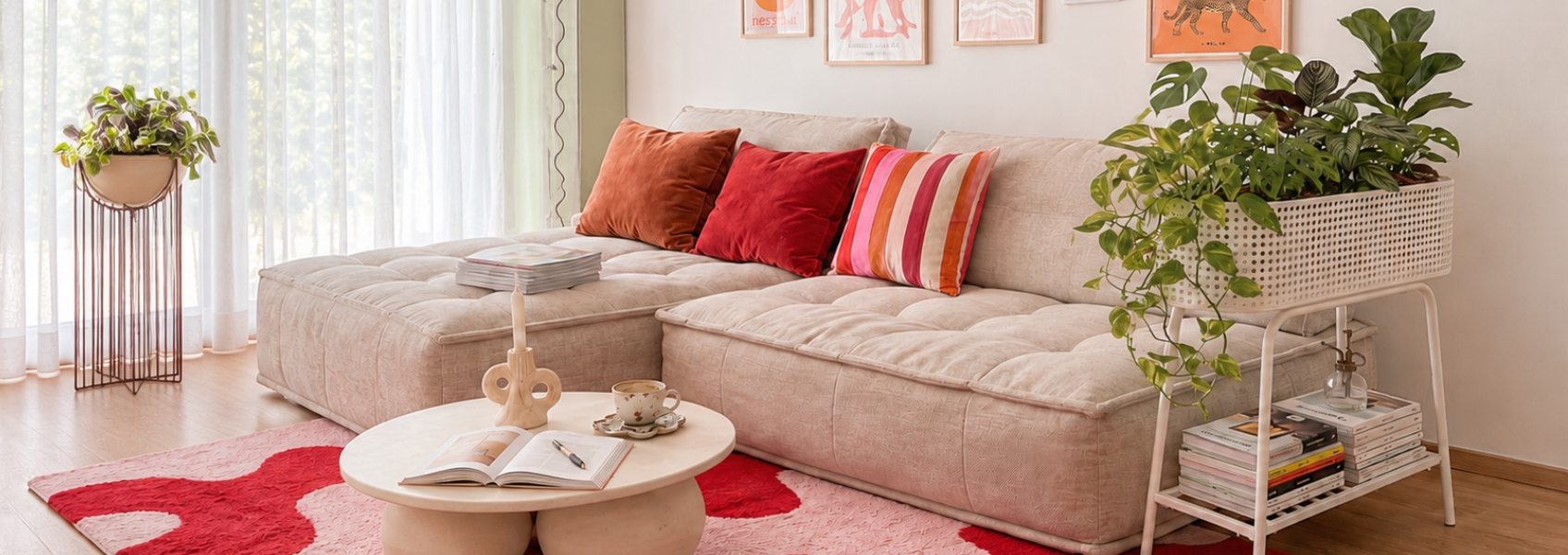
Plant pots, planters and stands do more than hold a plant: they control drainage, protect floors and furniture, and set how a room or balcony actually looks. Get the pairing wrong, a pot too small, no drainage, a stand that cannot take the weight, and it shows up quickly as root rot, water marks or a wobbling display. This guide works through the practical choices: which type you actually need, which material fits which spot, and how to size and place pots correctly.
In short
What size plant pot do I need?
A new pot should be about 2 to 5 cm wider in diameter than the plant's current pot or root ball, one size up rather than a dramatic jump. Leave at least 2 to 3 cm of depth below the roots for drainage material or extra compost. Going several sizes up at once leaves too much compost the roots cannot use, which stays damp and raises the risk of root rot.
- Fast-growing and young plants often move up a size every year; slow growers and succulents can go two to three years between repots
- Outdoor pots in exposed spots need more root space to anchor the plant against wind
- A mature plant that has reached its ideal size can stay in the same pot indefinitely, with just the top layer of compost refreshed
Which type of plant pot or planter do you need?
The right type depends on where the plant will stand and how much work you want the container to do beyond holding it.
- Plant pots: growing pots with drainage holes, sized directly to the plant's roots
- Decorative covers (cachepots): outer containers that hide a plain growing pot indoors; most have no drainage holes
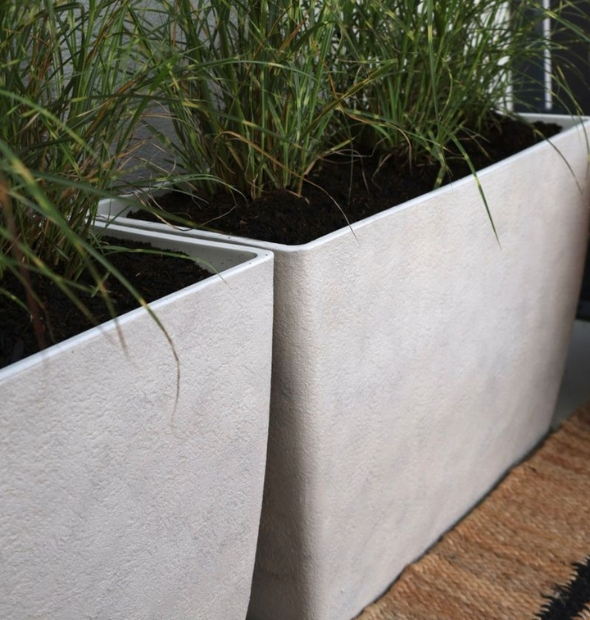
- Planter boxes and troughs: long, rectangular containers for windowsills, balconies and multi-plant outdoor displays
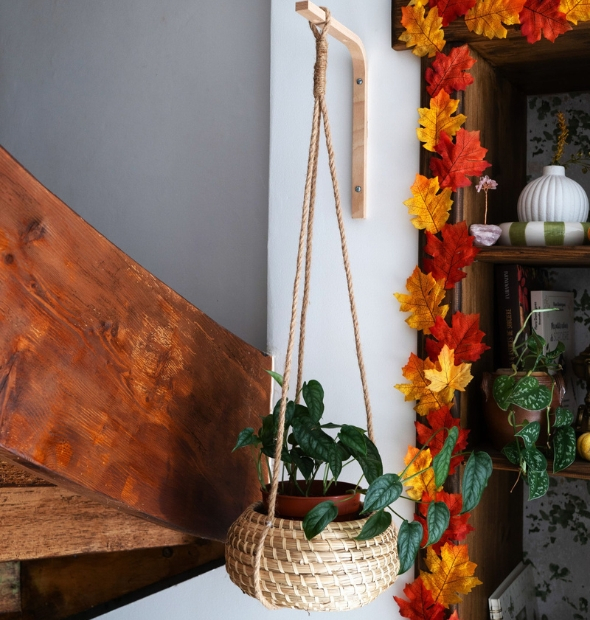
- Hanging planters: suspended containers that free up floor and shelf space; check the hanging point's weight rating once filled
- Tall planters: raised containers that add height to an entrance, patio or empty corner
- Self-watering planters: a built-in reservoir feeds the compost; follow the product's fill instructions
Do plant pots need drainage holes?
Yes, for almost any plant grown directly in compost. Roots need oxygen as well as water, and when compost stays waterlogged, oxygen cannot reach them and they begin to rot. Drainage holes let excess water escape after each watering, so only the moisture the plant can actually use stays in the pot. If a pot has no holes, either choose a different one that does, or use it purely as a decorative cover with a separate, holed insert inside, as explained below.
Do you need to add an insert, or is the pot ready to plant into?
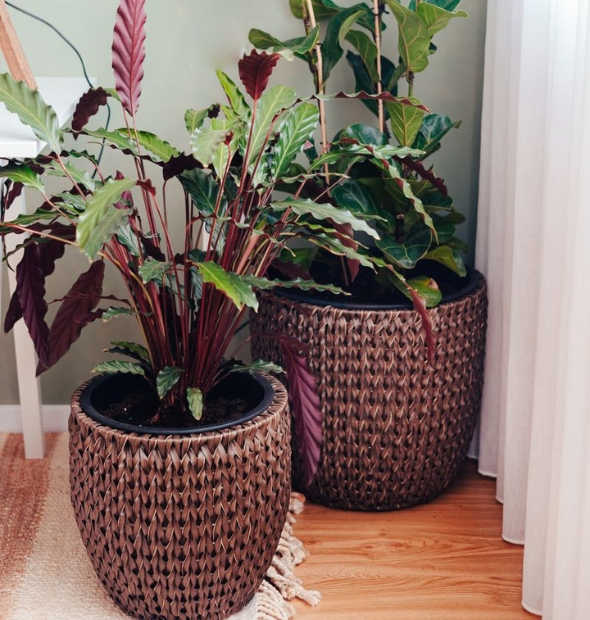
A decorative cover with no drainage holes is not ready to plant into on its own. It needs an insert inside it: a plastic growing pot with drainage holes that actually holds the compost and roots. Pot the plant into the insert, then stand the insert inside the decorative cover, rather than filling the cover itself with compost. If the product comes with a matching insert included, it is ready to plant into as soon as it arrives. If it does not, the plant's existing nursery pot usually works as the insert, so there is often no need to buy one separately, provided it fits inside the cover with a little room to lift it out.
Do you need a water saucer?
A water saucer is worth using wherever a pot has drainage holes, indoors or outdoors, since water escaping through the holes has to go somewhere. Indoors, a saucer protects the floor, shelf or windowsill underneath and should be emptied after each watering so the pot does not sit in standing water. Outdoors, a saucer is less essential on an open patio where water can run off, but still helps on a balcony or near a wall that could be damaged by repeated run-off.
Shop now: indoor plant pots
Which material suits your plant and space?
Material mainly decides three things: how forgiving it is if you forget to water, how heavy it gets once filled, and whether it can stay outdoors through winter. Indoor pots are never exposed to rain, frost or strong sun, so almost any material works. Outdoor pots need to be explicitly rated frost-resistant and weatherproof, or they risk cracking, fading or filling with rainwater.
Very light
Fibreglass
Light for its size, which is what makes it the usual choice for large outdoor planters.
Lightweight
Plastic or resin
Easy to move. A safe outdoor choice once confirmed UV- and frost-rated.
Lightweight
Woven materials
Not waterproof on its own, so it always needs an inner liner. Indoors, or a covered outdoor spot only.
Light–moderate
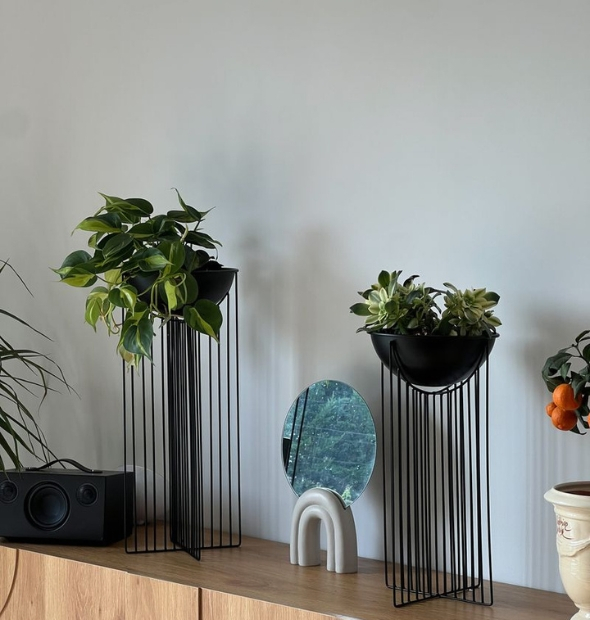
Metal
A contemporary look. Outdoors, check for rust protection and that drainage holes stay clear; direct summer sun can heat the pot and stress the roots.
Moderate
Wood
A natural look. Needs a liner or rot-resistant treatment if it's going outdoors.
Moderate–heavy
Terracotta or clay
Dries out visibly, so it suits forgetful waterers. Fine indoors; outdoors only if marked frost-resistant, as plain terracotta can crack.
Heavy
Glazed ceramic
A finished, decorative look. Best left indoors unless the product is explicitly marked frost-resistant.
Very heavy
Concrete or stone-effect
Plan on it staying in one outdoor spot permanently rather than moving it again.
Where should you place pots and planters?
Match a pot's position to the plant's light needs first. Most flowering and fruiting plants need several hours of direct sun, while foliage plants tolerate indirect light near a window.
- Windowsills: compact pots that fit securely and do not block the light
- Living room corners: one larger planter, or several at varied heights, to fill the space
- Shelves and sideboards: smaller, lighter pots with a waterproof mat or tray underneath
- Balconies: planter boxes along the edge, or pots stacked at different heights to save floor space
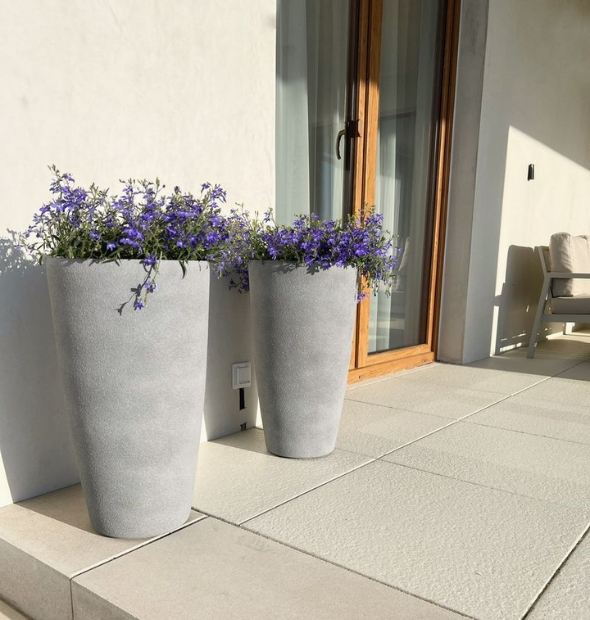
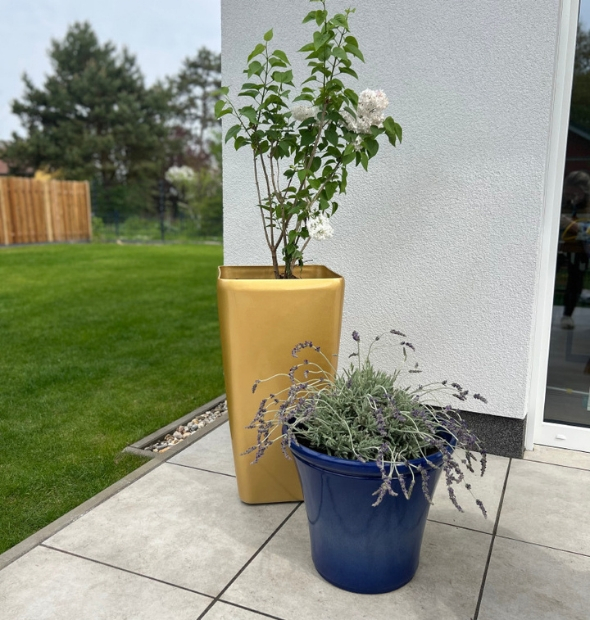
- Gardens and patios: larger, heavier planters for stability in exposed spots
Shop now: outdoor plant pots
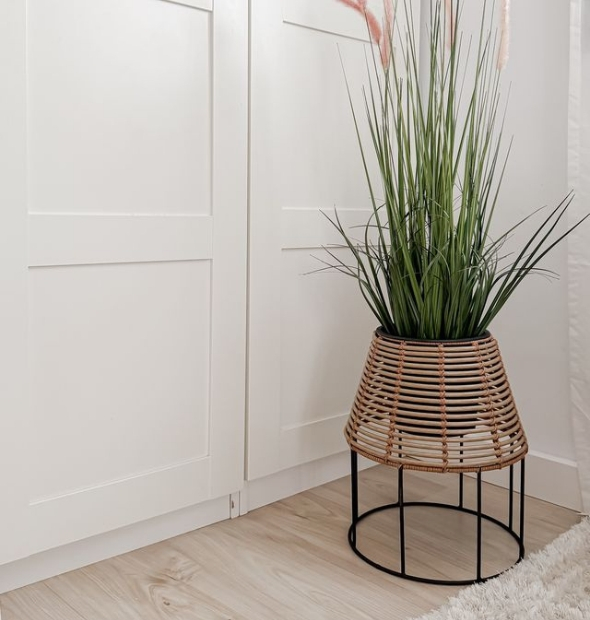
Do you need a plant stand?
A stand raises a pot closer to a window for better light, lifts it off a cold or wet floor, and gives trailing plants room to spread downward. Outdoors, it keeps the pot base off a damp patio or balcony floor.
Height suits the job: a low stand, around 20 to 30 cm, lifts a floor plant off cold tiles or a draught. A medium stand, around 40 to 60 cm, brings a plant level with a windowsill or shelf. A tall or pedestal stand, 70 cm and over, suits a trailing plant or a single statement specimen.
Check the stand's listed weight capacity against the pot once it is watered, not dry, and on a multi-tier stand check each shelf's own limit too. Compost can weigh two to three times as much wet as it does dry, so a pot that feels manageable on the shelf before watering can exceed its limit once it has been fed.
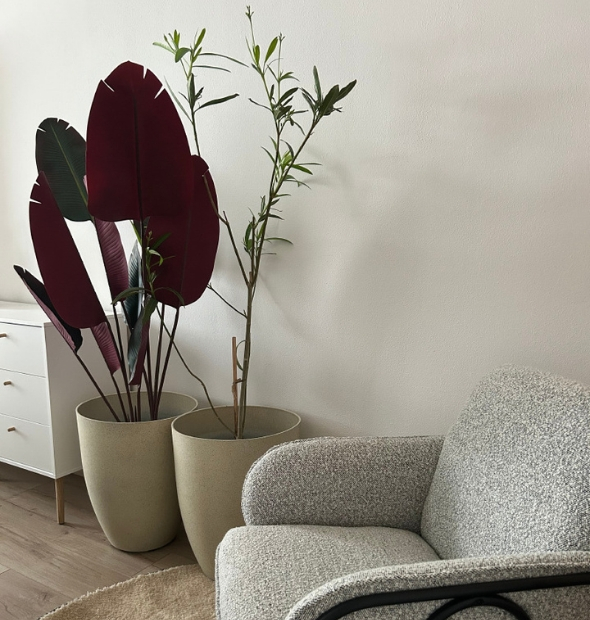
No live plants yet? Faux plants and flowers work in the same pots
A decorative pot, cachepot or stand works just as well with an artificial plant or flower arrangement, without any drainage, watering or light requirements to plan around. This suits a dark corner, a spot with no natural light, or anywhere a living plant would need more maintenance than the space allows.
Shop now: artificial plants and flowers
What to check before buying
Before buying a pot, planter or stand, work through these checks in order.
- Drainage holes in the growing pot, or an insert plan for a decorative cover that has none
- Pot sized for the next growth stage only, not several years ahead
- Material matched to the spot: frost-resistant and weatherproof outdoors, the right porosity for the plant's watering needs
- Saucer, tray or waterproof mat in place, and a routine for emptying it
- Stand or balcony load limit checked against the watered weight of the pot
- A wide, stable base for any tall or top-heavy planter
Frequently asked questions
Can several plants go in one planter?
Yes, provided the plants have similar light, watering and temperature needs. Choose a planter with enough room for all their roots to grow, and leave space between plants for air circulation.
How can I stop a tall planter from tipping over?
Choose a planter with a wide, stable base and place it on an even surface. In exposed or windy spots, a heavier planter or a position away from busy walkways keeps it secure.
Can outdoor planters stay outside over winter?
Only if the material and construction are rated for frost and changing weather. Check the product details, empty any standing water, and move fragile or non-frost-resistant planters somewhere sheltered.
How do I know when my plant has outgrown its pot?
Look for roots showing through the drainage holes or circling the surface of the compost, and compost that dries out much faster than it used to. A plant that has become noticeably top-heavy for its pot is another sign it is ready for the next size up.
Should you water a plant from the top into the pot or into the saucer?
Most plants are best watered from the top directly onto the compost until excess water drains out into the saucer, which should be emptied after a few minutes. Bottom watering into the saucer works well for species sensitive to wet leaves or stems (such as African violets or cyclamen), provided you pour away any unabsorbed water after 15 to 20 minutes.